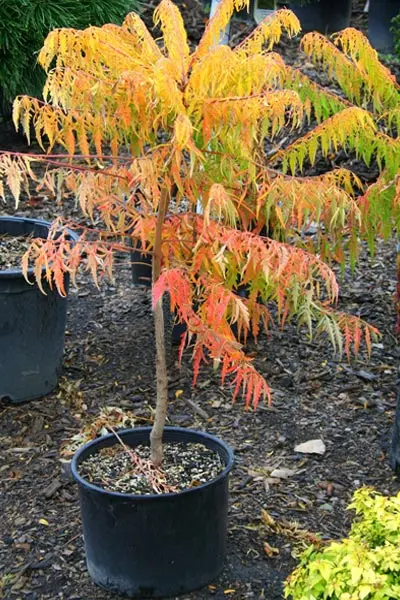
Staghorn sumac (Rhus typhina) is a highly effective late-summer honey plant and a valuable multi-purpose tree, increasingly sought by beekeepers and gardeners. Its main advantage for the apiary is the flowering time: large cone-shaped clusters open in midsummer (June–July), after the main spring honey plants have finished. The flowers yield plenty of nectar and pollen and attract bees even in dry weather. Sumac honey is dense and aromatic, with a light amber tone and a pleasant mild taste. Thanks to its strong root system, the tree is also ideal for hedges around the apiary, shielding hives from strong winds.
Spice and raw material
Beyond beekeeping, staghorn sumac is a famous source of the popular eastern spice sumac. The dark burgundy fluffy drupes that ripen in autumn have a pleasant sour, slightly astringent taste. Their dried and ground skins make a seasoning that is indispensable in cooking as a natural acidifier for meat, marinades and salads. All parts of the plant are also rich in tannins and vitamin C, which makes it valuable in folk medicine (as an anti-inflammatory) and in tanning. High ornamental value, tolerance of poor soils and drought resistance make sumac seedlings an excellent choice for any plot.